Before and after
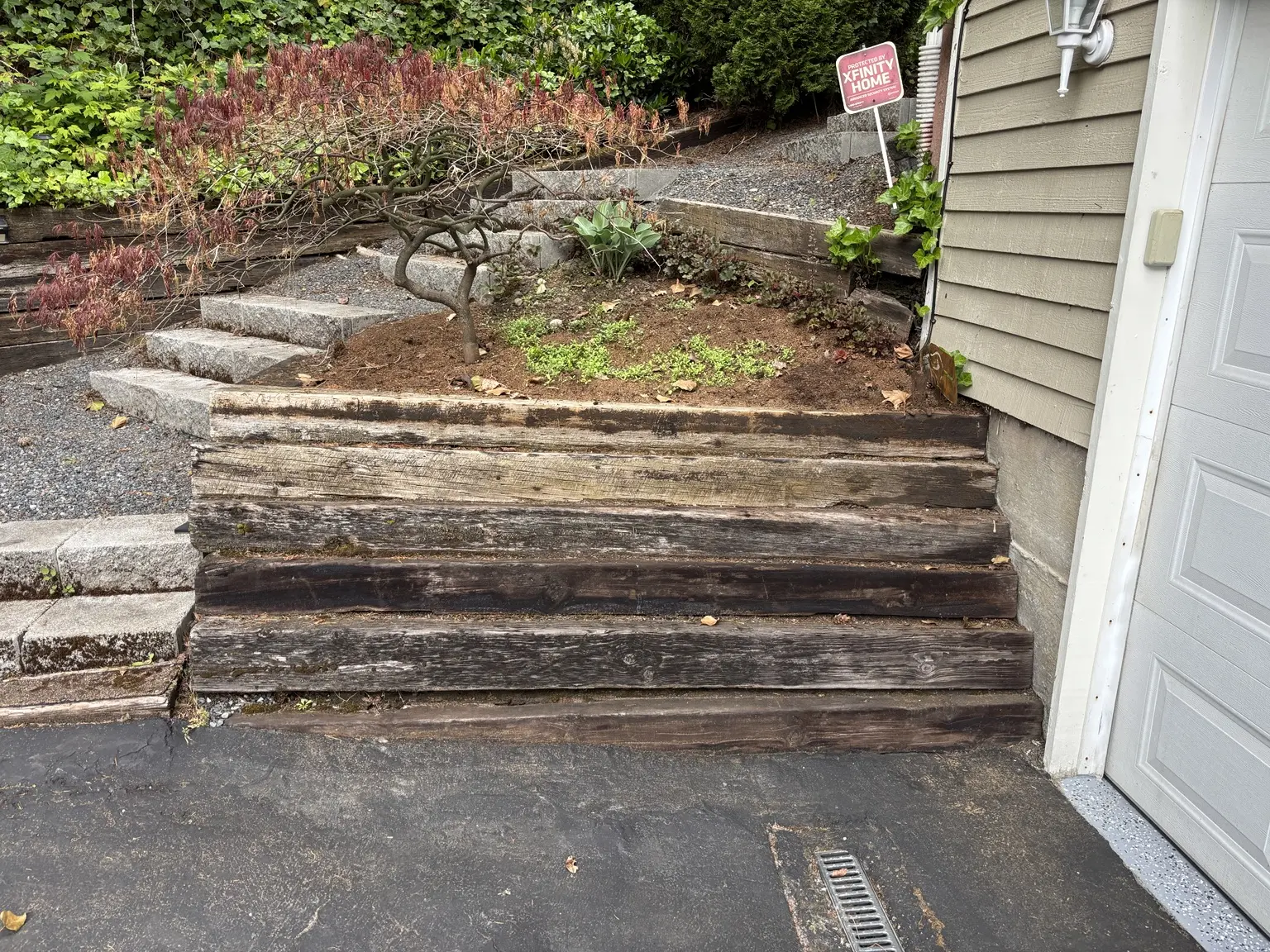
The entrance beside my house had reached the point where small repairs no longer made sense. The old timber retaining wall was weathered and failing, the transitions were uneven, and the route through the hillside looked tired. Replacing the retaining wall became the foundation for improving the whole entrance.
The retaining wall replacement
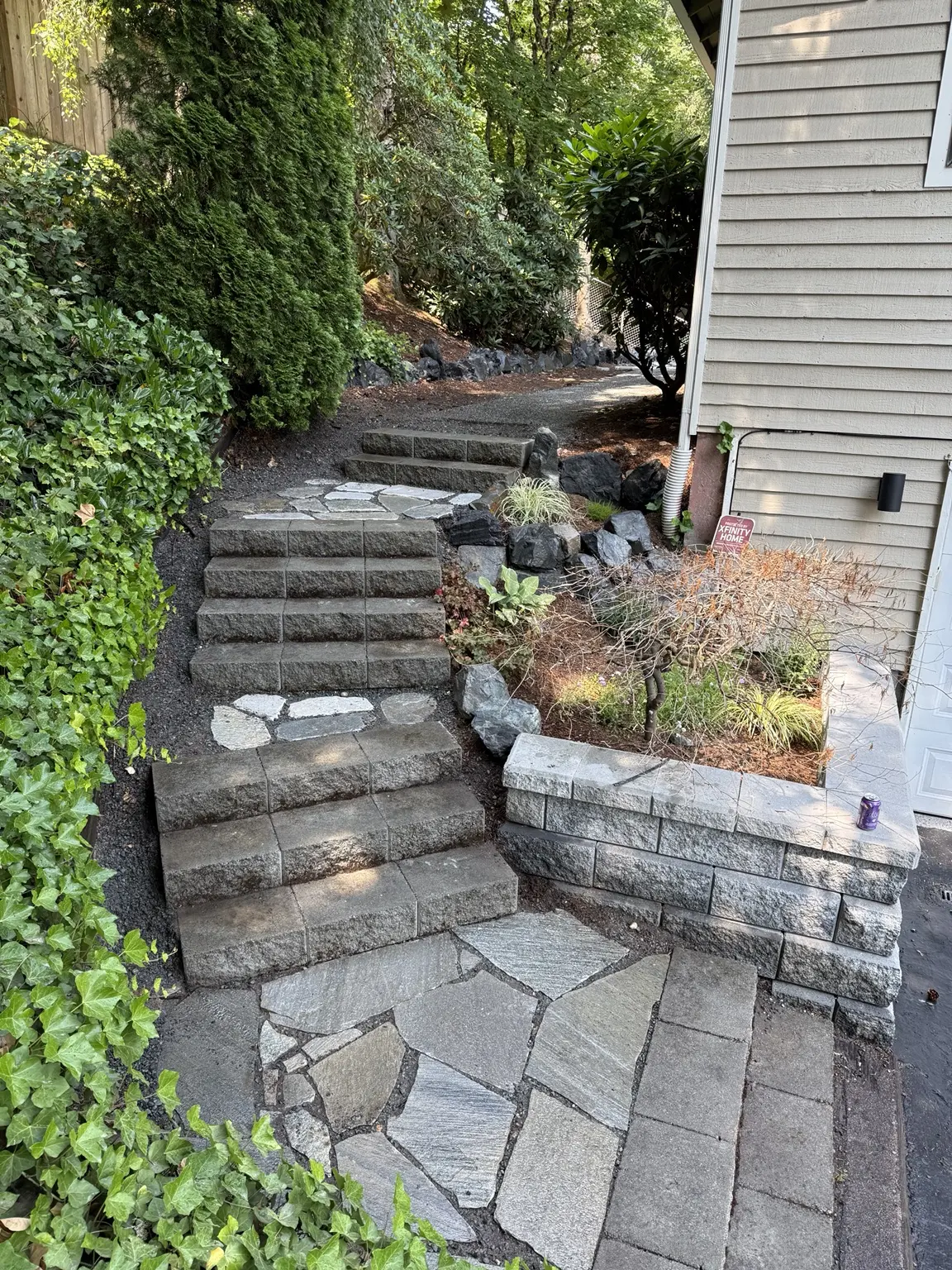
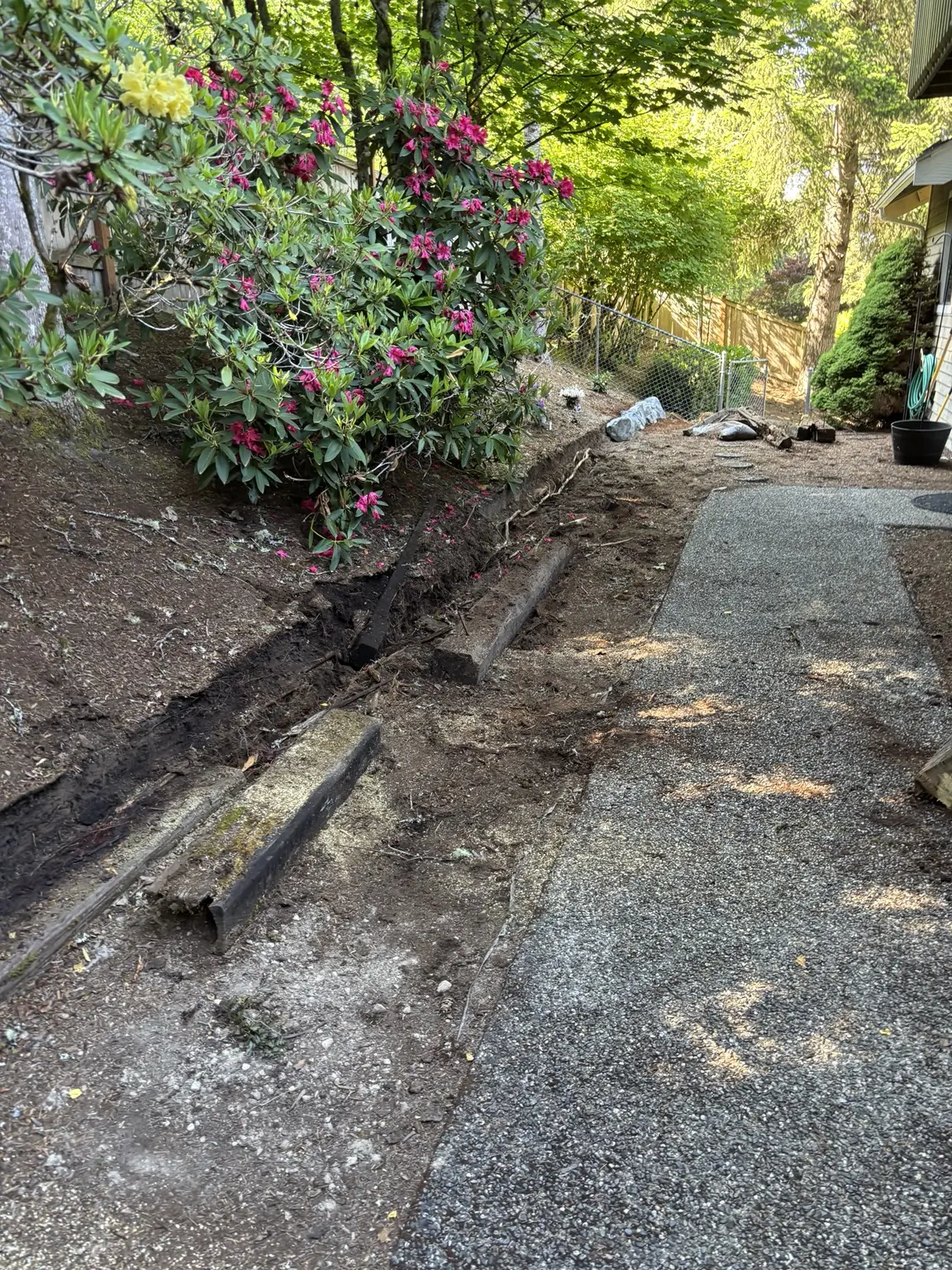
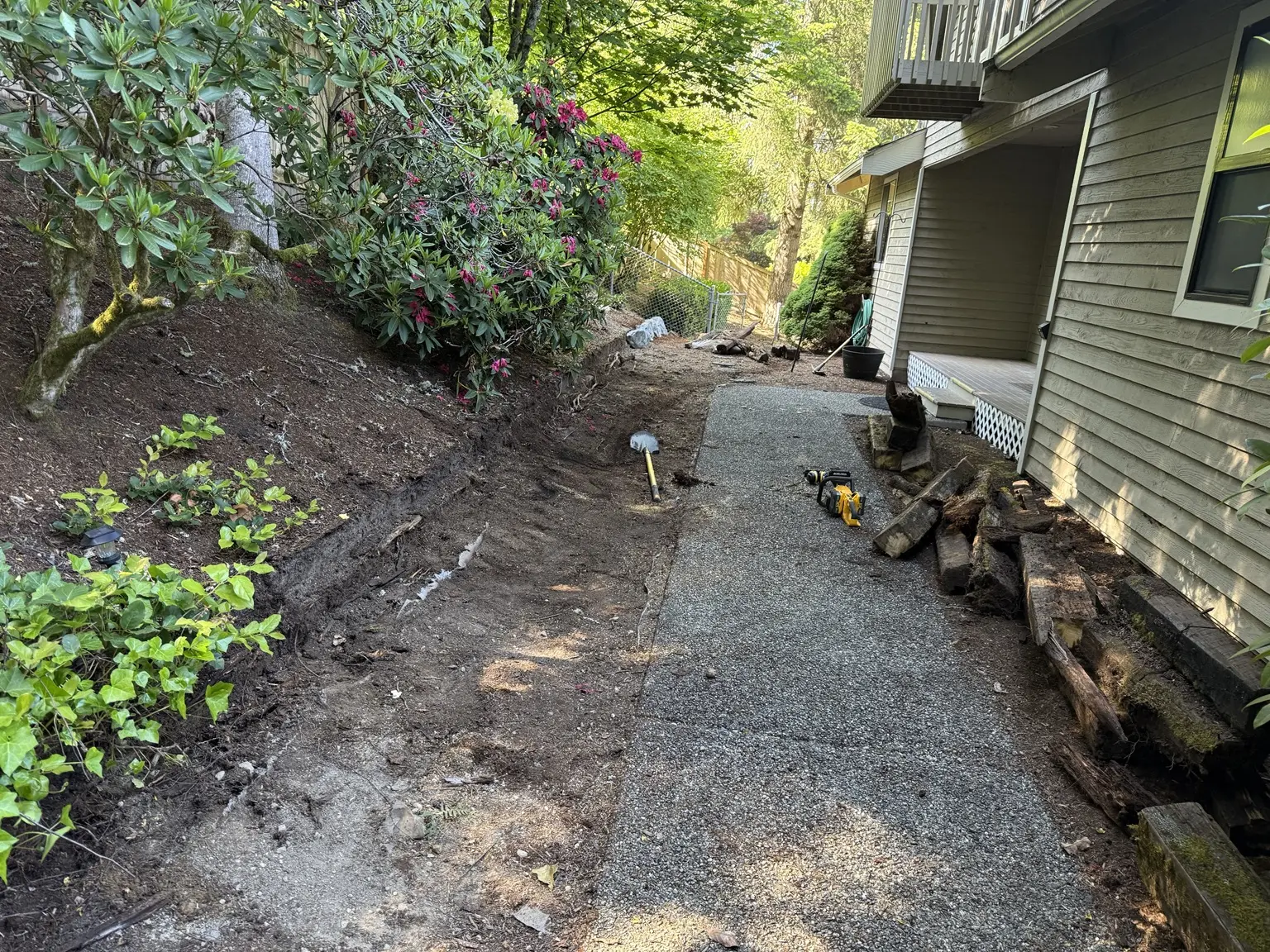
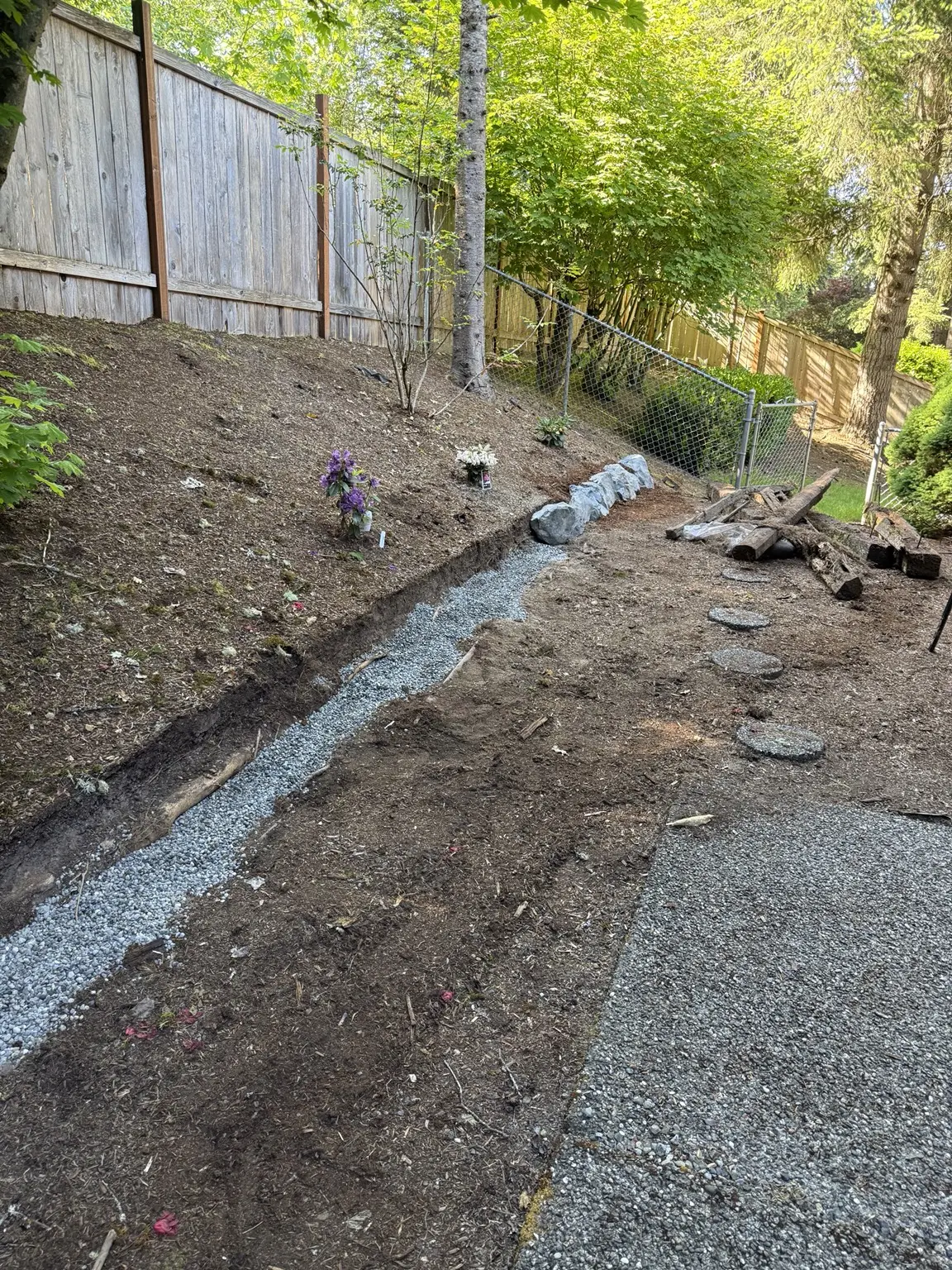
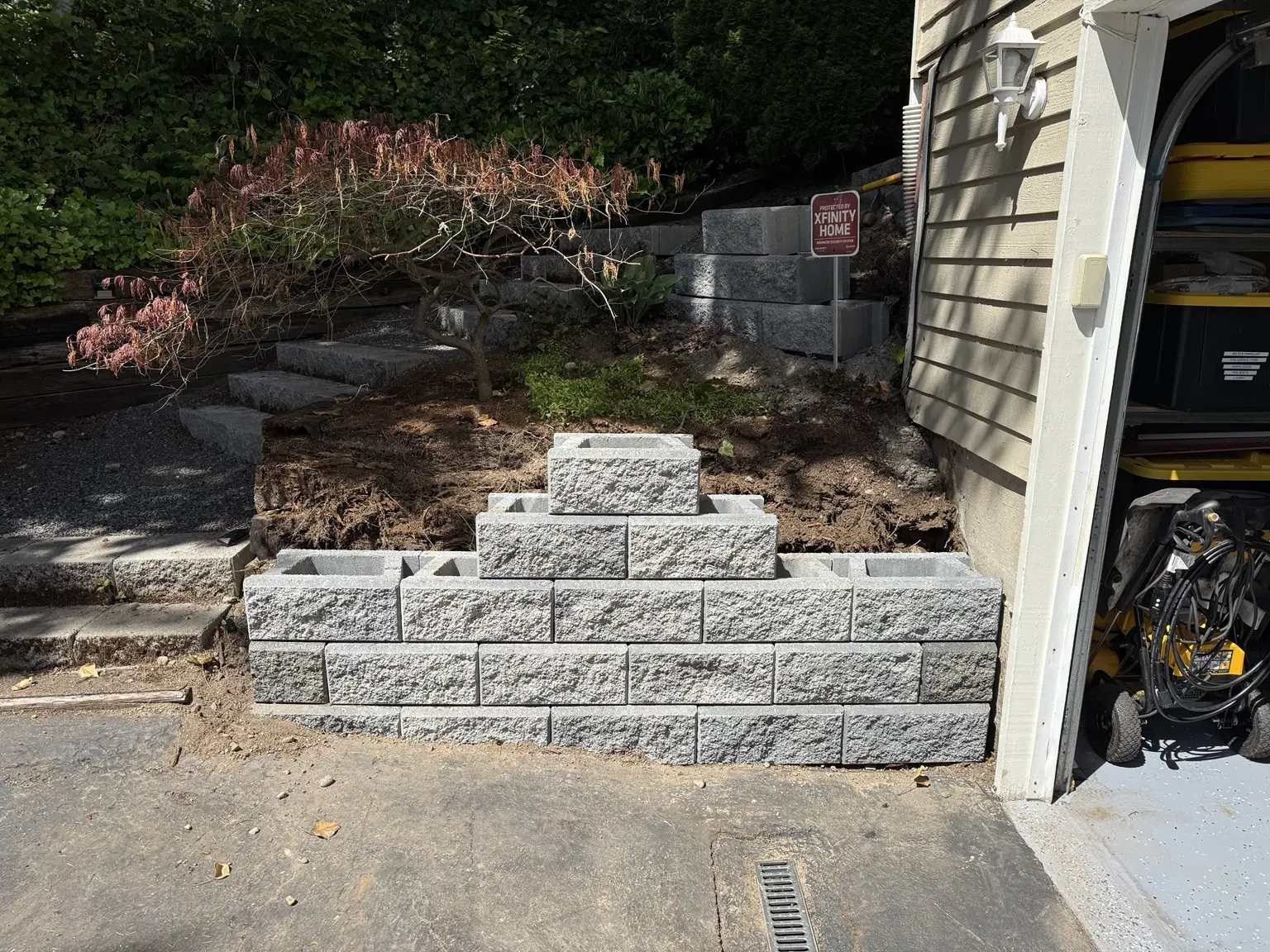
The biggest improvement was replacing the deteriorated landscape timbers with segmental retaining block. The old wood had been in constant contact with soil and moisture, and once demolition began, the amount of deterioration was easier to see. Removing it let me evaluate the grade, improve the base and drainage, and rebuild the retained areas with a material better suited to the entrance.
A retaining wall is not simply a row of blocks. The base, drainage, setback, soil conditions and wall height all affect how it performs. Larger or structurally important walls may require engineering and permits, so those conditions should be checked before work begins.
How the entrance changed
Rebuild the walking route
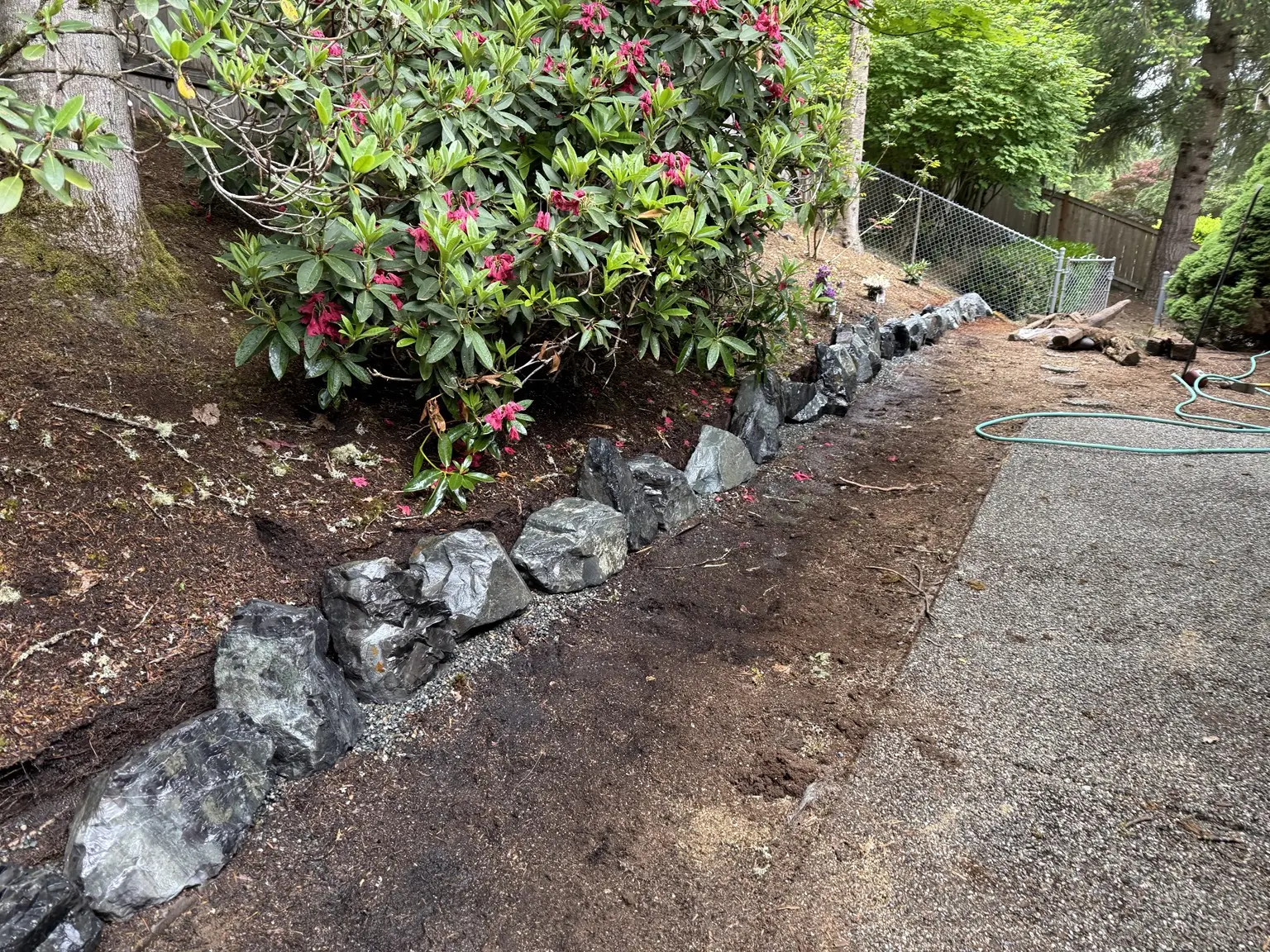
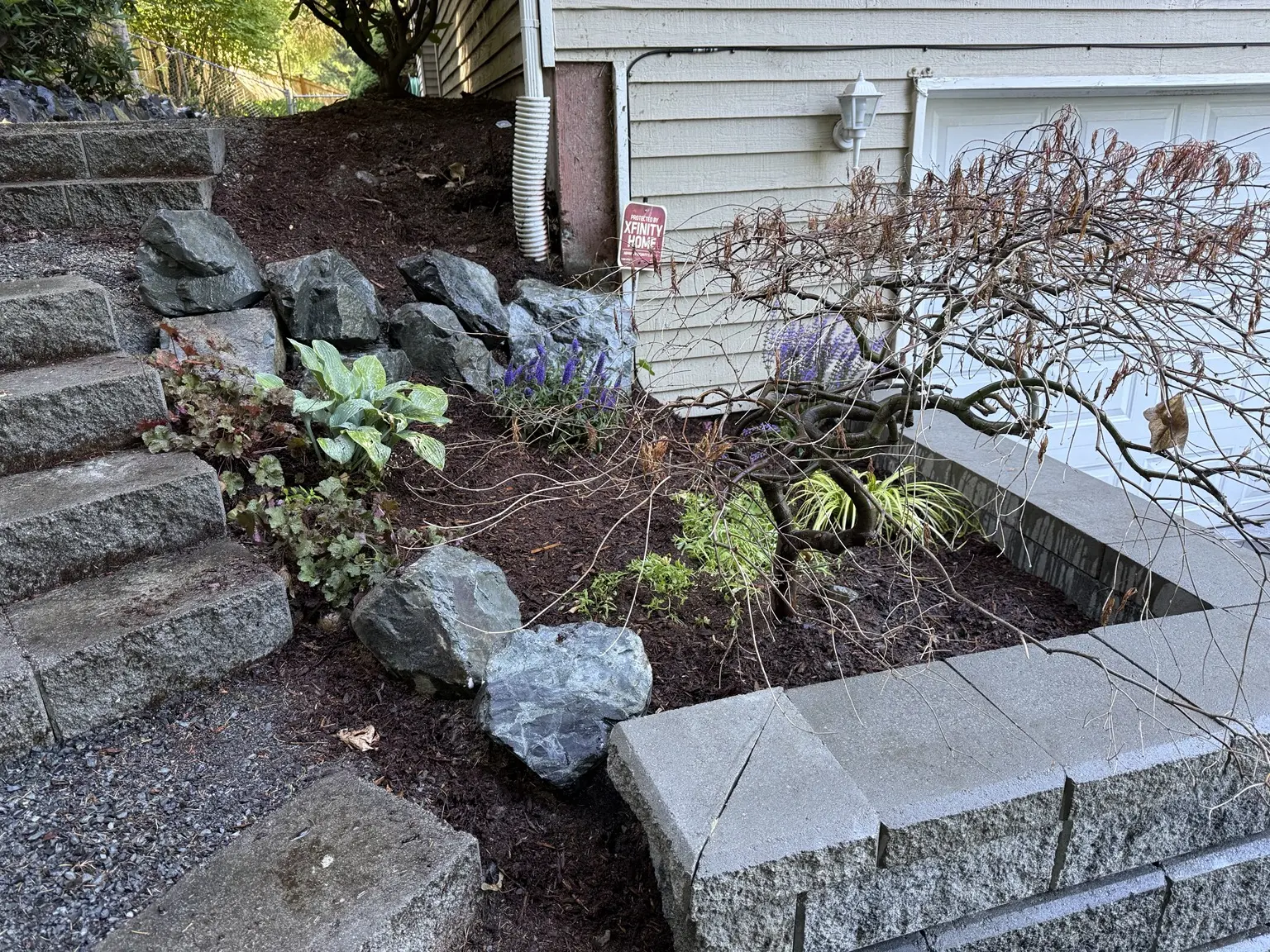
The retaining-wall replacement solved the failing edge, but the entrance also needed a route that felt intentional. I used masonry steps and natural stone landings to connect the driveway to the hillside path. Outdoor materials are naturally irregular, so I checked each transition for stable bearing and a predictable step.
Heavy stone and block change the risks of a project. Moving and setting them safely requires the right equipment, careful lifting and help when needed. Local requirements for stair geometry, landings, guards and handrails should also be checked before construction.
What I learned
- Start with what is failing. Cosmetic improvements would not have fixed the deteriorated retaining wall.
- Demolition reveals the real project. Buried timber, roots, soil and drainage conditions are difficult to judge until the old material is removed.
- Drainage is part of the structure. Water management and base preparation need to happen before stone, block or planting.
- Build safe access first. A beautiful entrance still needs stable, comfortable steps and landings.
- Keep what already works. Preserving mature landscaping helped the rebuilt entrance look established instead of newly dropped into place.
The finished entrance
The project began with a deteriorated timber retaining wall, but replacing it gave me the opportunity to improve the whole entrance. The new block wall holds the grade with a cleaner edge, the stone and masonry create a defined walking route, and the established landscaping keeps the entrance connected to the rest of my yard.