A Hidden Play Area:
Toy Storage Today, Playroom in Minutes
I found a way to give the kids their own little world without giving the living room over to toys all day.
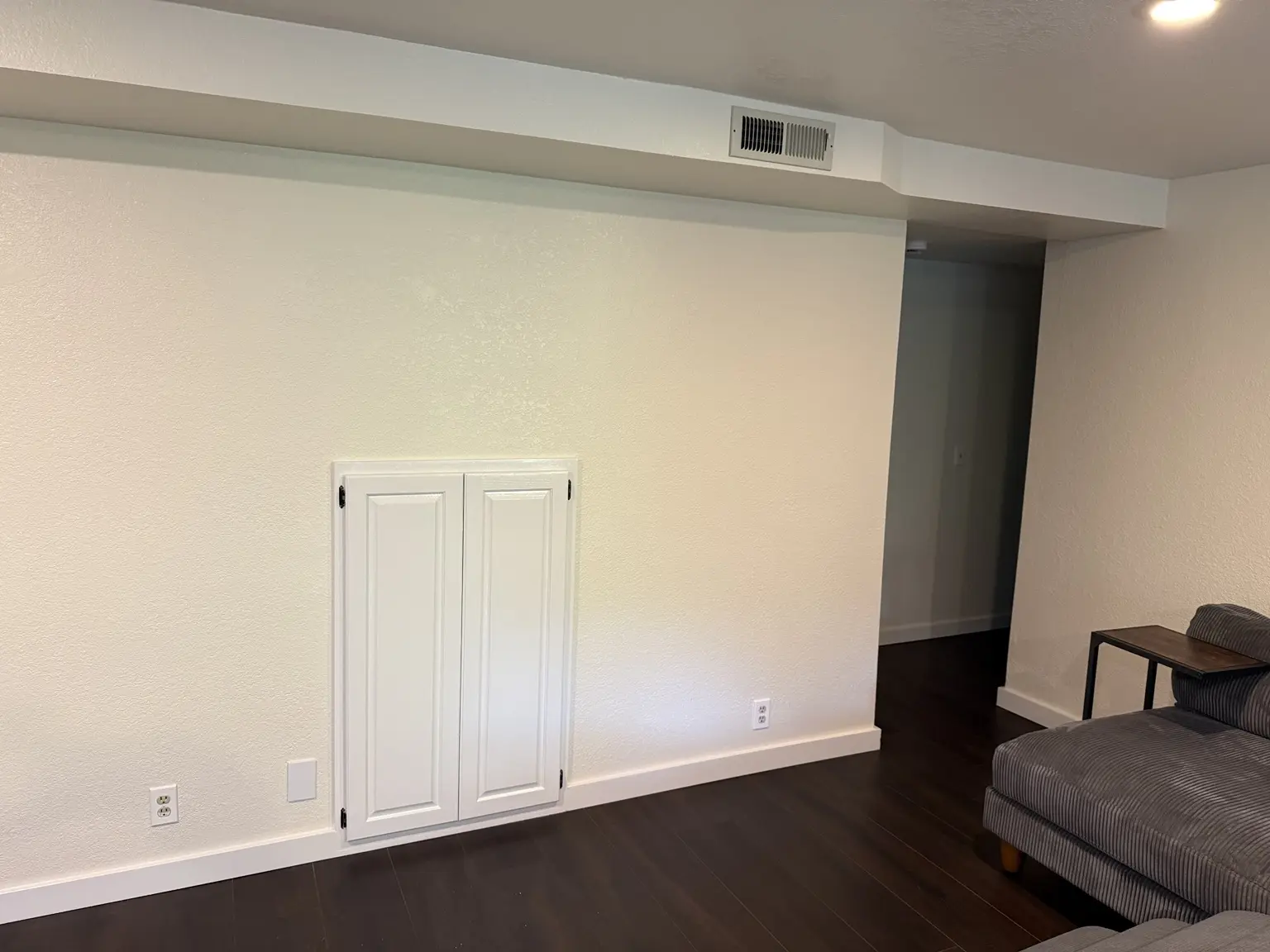
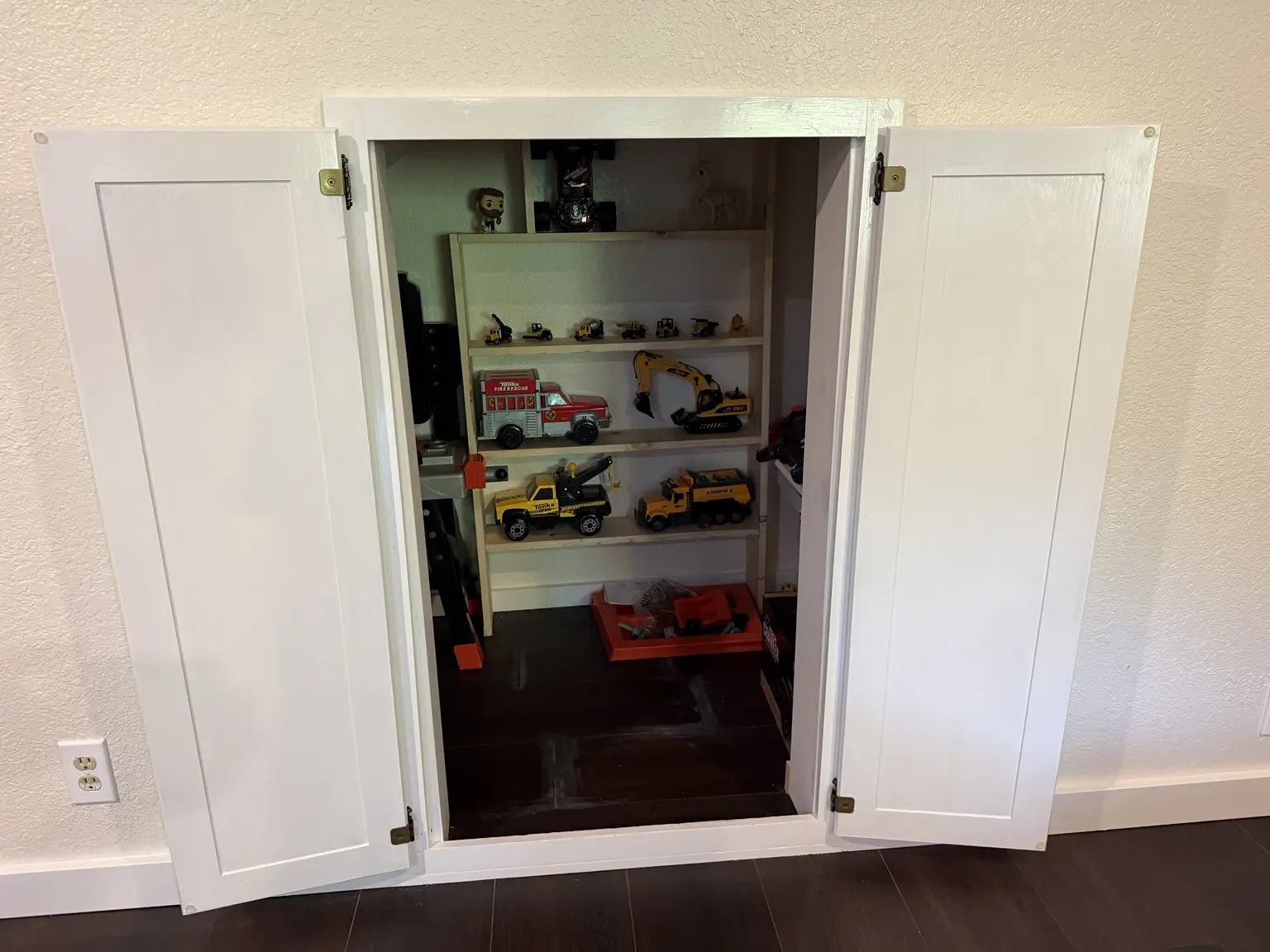
At my house, this small built-in storage space was useful—but I could see that it had the potential to do much more. Instead of letting toys spread across my living room, I turned the nook into a dedicated children's area that I can open for play and close again when the adults want the room back.
The best part is that I can transform it in seconds. The toys have a home, the children know where to find them, and when adult visitors arrive, I close two doors and the whole collection disappears.
Why This Little Space Works
The idea is not to build a miniature sealed playroom. It is to use an existing storage nook as an open-door play and toy zone. Shelves make favorite toys easy to see, the floor area handles the larger pieces, and the doors provide a clean visual reset when playtime is over.
Make Storage Kid-Friendly
Keep frequently used toys within easy reach. Heavier items belong low, while lighter display pieces can go higher. Bins or baskets can handle loose parts and make cleanup much faster. Picture labels are especially useful for younger children who are not reading yet.
The Adult-Visitor Advantage
Family spaces have to work for more than one audience. During the day this can be trucks, building toys, books and pretend play. When company comes over, close the doors and the living room immediately looks more grown-up again.
That is the larger lesson from this project: good storage does not just hold things — it changes how a room can be used.
Ideas to Make a Nook Like This Better
- Add simple interior lighting or battery-powered puck lights if the space is dim.
- Use washable, easy-clean flooring at the bottom.
- Add labeled bins for small parts and rotating toy categories.
- Consider a small book ledge or drawing surface if space allows.
- Anchor shelves securely and keep anything heavy down low.
- Use door hardware that does not create obvious pinch points for small fingers.
Before Converting Any Storage Space
Look behind and around the space before changing it. Existing cavities can contain HVAC ducts, electrical wiring, plumbing or access panels that must remain serviceable. A storage nook under stairs or inside a wall may also have different building and fire-safety considerations than an ordinary cabinet.